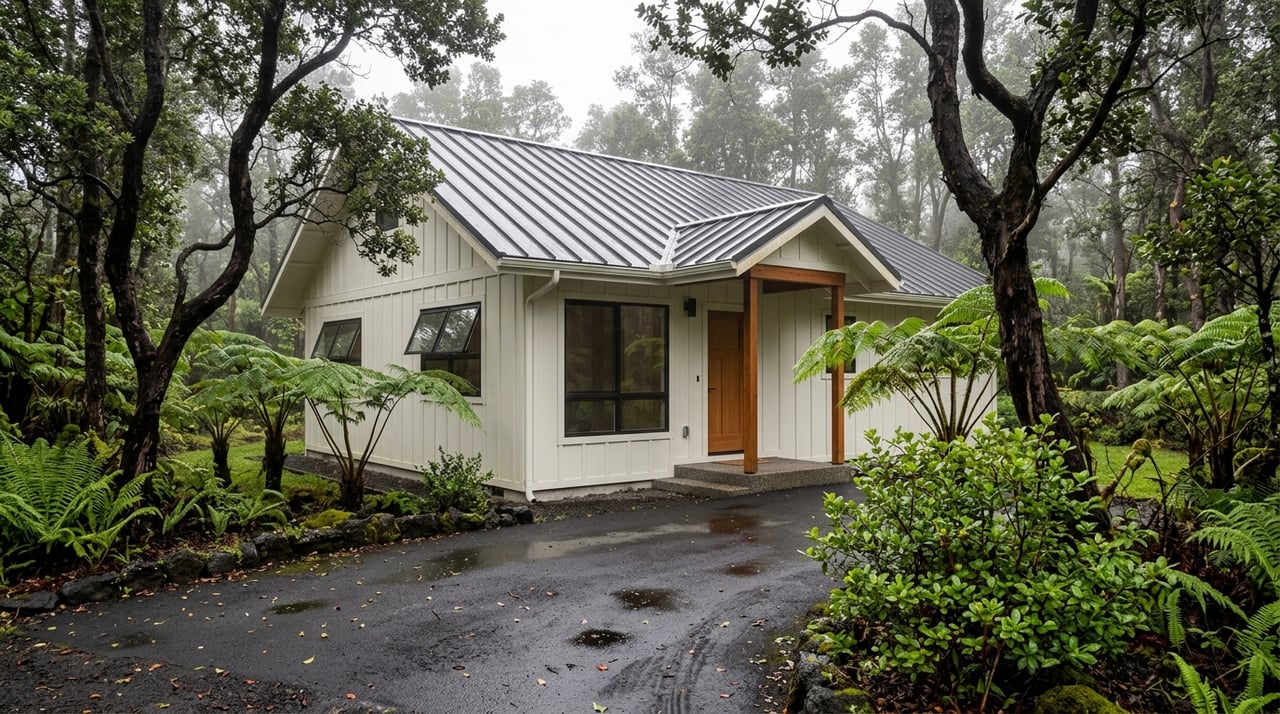
If you picture Hawaiʻi living as hot beach days and planned subdivisions, Volcano Village may surprise you. Here, daily life is shaped by misty forest, cool temperatures, creative energy, and the presence of one of the world’s most active volcanoes. If you are considering a move, a second home, or an investment in this part of East Hawaiʻi, this guide will help you understand what Volcano Village living really feels like and what to expect before you buy. Let’s dive in.
Where Volcano Village Sits
Volcano Village is a rural community on the edge of Hawaiʻi Volcanoes National Park. According to Hawaiʻi County planning materials, the settled area stretches from Volcano Golf and Country Club Estates to Kahaualeʻa Road, with the historic and commercial core centered along Old Volcano Road near mile marker 26. Outside that core, much of the area is residential, agricultural, and forested.
That setting gives Volcano a very different feel from a typical suburban neighborhood. It functions more as a park-adjacent upland community than a commuter suburb, with a slower rhythm and a stronger connection to the surrounding landscape.
For orientation, the National Park Service notes that Hawaiʻi Volcanoes National Park is about 45 minutes from Hilo and about 2 to 2.5 hours from Kailua-Kona. That helps you place Volcano Village within East Hawaiʻi and understand why many buyers see it as a distinct lifestyle market.
What Daily Life Feels Like
Life in Volcano Village tends to center on nature, home, and small local gathering places. You are not moving here for a long strip of chain stores or a master-planned routine. You are choosing a community where forested roads, changing weather, and a strong local identity shape everyday living.
Errands are possible in the village, but convenience looks different here. The county’s current Hele-On Route 12 schedule includes stops at the Cooper Center, Volcano General Store, Volcano Village Post Office, and the Hawaiʻi Volcanoes National Park visitor center, with service available Monday through Saturday on the current timetable.
For bigger shopping runs, you will likely head out of the village. Kilauea Military Camp’s official shopping guide places Keaʻau about 22.5 miles away and Hilo about 29 to 30 miles away, with larger stores and more options in both areas. In practical terms, that means planning ahead is part of the Volcano lifestyle.
Volcano’s Cool-Climate Setting
One of the biggest draws for buyers is the climate. Volcano Village sits at a higher elevation than many other East Hawaiʻi communities, and that creates a noticeably cooler, wetter environment.
NOAA data from the Hawaiʻi Volcanoes National Park headquarters station at 3,971 feet shows a 1991 to 2020 mean annual temperature of 61.7°F and annual precipitation of 96.24 inches. NOAA also notes that climate can change sharply with elevation in Hawaiʻi, even across short distances.
For you as a buyer, that means Volcano Village is better understood as a cool, wet upland forest setting, not a tropical beach climate. Homes, landscaping, and day-to-day habits all tend to reflect that reality.
A Strong Arts Identity
Volcano Village is known for more than its climate and scenery. It also has a long-standing arts community that gives the area a creative, lived-in character.
The Volcano Art Center has sponsored workshops, exhibitions, and cultural programming since 1980, with activity based both in the park gallery and at the Niaulani Campus in Volcano Village. Its ongoing calendar continues to reflect how active the arts scene remains.
Another layer comes from the Volcano Village Artists Hui, a group of working artists in many media whose work is inspired by lava, birds, plants, and Hawaiian culture. Together, these organizations help explain why Volcano often feels deeply personal and expressive rather than uniform.
Community Gatherings and Local Rhythm
The Cooper Center plays an important role in local life. County planning materials describe it as an information and meeting center with parking, a playground, and native forest, making it more than just an event site.
It is also associated with one of the community’s best-known recurring gathering points, the farmers market. That market has been described in county and local event coverage as a place for produce, baked goods, crafts, and neighborly connection. If you are trying to picture the social side of Volcano Village, this is one of the clearest examples.
Homes Have More Variety Here
One of the most interesting parts of buying in Volcano Village is the housing mix. This is not a place where every street follows the same plan or every home was built in the same decade.
The local historic record shows that the Hale Ohia tract developed early as a retreat for people seeking cooler elevations. According to the Volcano Community Foundation, that area includes plantation-inspired cottages, Craftsman bungalows, plantation-style manager’s homes, simple rectangular homes with protected lanais, and early log cabins, with some of the oldest homes dating to the 1920s and 1930s.
That history still shapes how Volcano feels today. Instead of one dominant look, you are more likely to find a blend of historic cottages, cabins, and custom forest homes, each responding a little differently to the land, weather, and era in which it was built.
Subdivisions Around Volcano
While the older village core has a layered and historic feel, later subdivision growth expanded housing options across the wider area. The community foundation reports that between 1958 and 1968, more than 6,000 lots were offered in nearby Volcano-area subdivisions, including Mauna Loa Estates, Hawaiian Orchid Island Estates, Royal Hawaiian Estates, ʻŌhiʻa Estates, and Fern Forest.
For buyers, this wider pattern matters. It means the Volcano market includes both older village homes with character and homes in later subdivisions that may offer different lot layouts, construction eras, and neighborhood patterns.
The golf-course area stands apart a bit from the historic core. The community foundation describes it as sunnier and drier, warmer by day and cooler at night, with newer and somewhat larger homes on broader suburban-style loops. If you are comparing options, this can be an important distinction within the larger Volcano area.
Trade-Offs to Understand
Volcano Village has a lot to offer, but it also asks for realism. Buyers who do best here usually appreciate the lifestyle for what it is rather than expecting it to feel like Hilo, Kona, or a resort district.
A few of the main trade-offs include:
- Cooler, wetter weather than many parts of Hawaiʻi
- Longer drives for major shopping and some services
- A rural setting with less suburban convenience
- Housing variety that can make home comparisons less straightforward
- Volcanic activity as a real part of the local context
Those factors are not negatives for every buyer. In fact, for many people, they are exactly what makes Volcano special. The key is knowing your priorities before you start touring homes.
Living Near Kīlauea
In Volcano, the volcano is not just a backdrop. It is part of the reality of living here.
The USGS states that Kīlauea is one of the world’s most active volcanoes and has been intermittently erupting within the summit caldera since Dec. 23, 2024. The same page identifies Volcano as one of the nearby towns and rates the volcano’s threat potential as very high.
That does not mean every day is disruptive, but it does mean informed buying matters. County and state guidance, as referenced by USGS, remind residents to monitor changing conditions and watch for ashfall, tephra, and vog advisories when activity shifts. If you are considering a property in Volcano Village, understanding this context should be part of your decision-making process.
Who Volcano Village Appeals To
Volcano Village often draws buyers who want a home with character and a setting that feels rooted in place. That can include full-time residents, second-home buyers, and people relocating to East Hawaiʻi who prefer forest, privacy, and cooler weather over a busier or warmer environment.
It can also appeal to buyers who value architecture with individuality. Because the housing stock is so mixed, you may find cottages, cabins, and custom homes that feel more personal than what you would see in a more uniform neighborhood.
Just as important, this area tends to suit buyers who are comfortable with a little more planning in daily life. If you enjoy a rural pace and see the landscape as part of the experience, Volcano can be a compelling place to search.
Buying in Volcano With Clarity
If you are home shopping in Volcano Village, it helps to compare properties through a local lens. Two homes with similar bedroom counts can live very differently based on elevation, rainfall, subdivision layout, surrounding forest, and distance from the village core.
That is where local guidance matters. You want to understand not only what a home looks like online, but also how the setting, access, and neighborhood context may shape your day-to-day experience.
If you are thinking about buying or selling in Volcano or anywhere in East Hawaiʻi, Tessie Fontes can help you navigate the process with practical local insight, clear communication, and organized support from start to finish.
FAQs
What is daily life like in Volcano Village, Hawaiʻi?
- Daily life in Volcano Village is rural and forest-oriented, with local stops for basic errands, community gathering places like the Cooper Center, and longer drives to Keaʻau or Hilo for bigger shopping trips.
What is the climate like in Volcano Village, Hawaiʻi?
- Volcano Village has a cool, wet upland climate, with NOAA reporting a mean annual temperature of 61.7°F and annual precipitation of 96.24 inches at the nearby park headquarters station.
What types of homes are found in Volcano Village?
- Volcano Village includes a mix of historic cottages, Craftsman bungalows, cabins, plantation-influenced homes, and custom forest homes, along with houses in later subdivisions around the wider area.
Is Volcano Village known for an arts community?
- Yes, Volcano Village has a strong arts identity supported by organizations such as the Volcano Art Center and the Volcano Village Artists Hui, along with classes, exhibitions, and local creative events.
What should buyers know about living near Kīlauea in Volcano, Hawaiʻi?
- Buyers should understand that Kīlauea is an active volcano, and USGS advises residents and nearby communities to stay aware of changing conditions, including possible ashfall, tephra, and vog advisories.
How far is Volcano Village from Hilo and Hawaiʻi Volcanoes National Park?
- The National Park Service says Hawaiʻi Volcanoes National Park is about 45 minutes from Hilo, which helps place Volcano Village as an East Hawaiʻi community closely tied to the park area.
