Buying a home in Volcano can feel exciting and a little intimidating at the same time. You may love the cooler climate, lush landscape, and unique sense of place, but you also need to understand how living near an active volcanic area affects your purchase. If you are thinking about buying in Volcano, a little extra due diligence can help you make a smarter decision and avoid expensive surprises. Let’s dive in.
Start With Lava Zone Risk
In Volcano, lava-flow hazard zone is one of the first things you should confirm before writing an offer. Hawaiʻi County explains that Kīlauea has erupted in every decade since the 1950s, and the island is divided into hazard zones 1 through 9. On the Kīlauea and Mauna Loa side of the island, zones 1 through 3 apply, with Zone 3 considered less hazardous than Zone 2 because it is farther from recently active vents or protected by topography, according to Hawaiʻi County’s eruption and hazard zone information.
One important detail is that hazard-zone boundaries are not always simple or uniform. Neighboring lots can have different risk profiles, so you should verify the specific parcel and TMK rather than assume an entire street or subdivision has the same designation. That single step can affect insurance options, lender review, and future resale.
Understand Volcano’s Climate Conditions
Volcano is not a typical Hawaiʻi climate. Near the 4,000-foot elevation area of Hawaiʻi Volcanoes National Park, average annual rainfall is about 105 inches, with November usually the wettest month and June the driest, based on National Park Service planning data.
That same source notes that temperatures are cooler than the coast. Summer daytime temperatures are typically in the 70s to 80s, winter daytime temperatures are often in the 60s to 70s, and nighttime temperatures can drop into the 50s, 40s, or occasionally near freezing. For many buyers, that cooler setting is part of Volcano’s appeal, but it also means moisture, drainage, and mold should be taken seriously during inspections.
Ask How the Home Gets Water
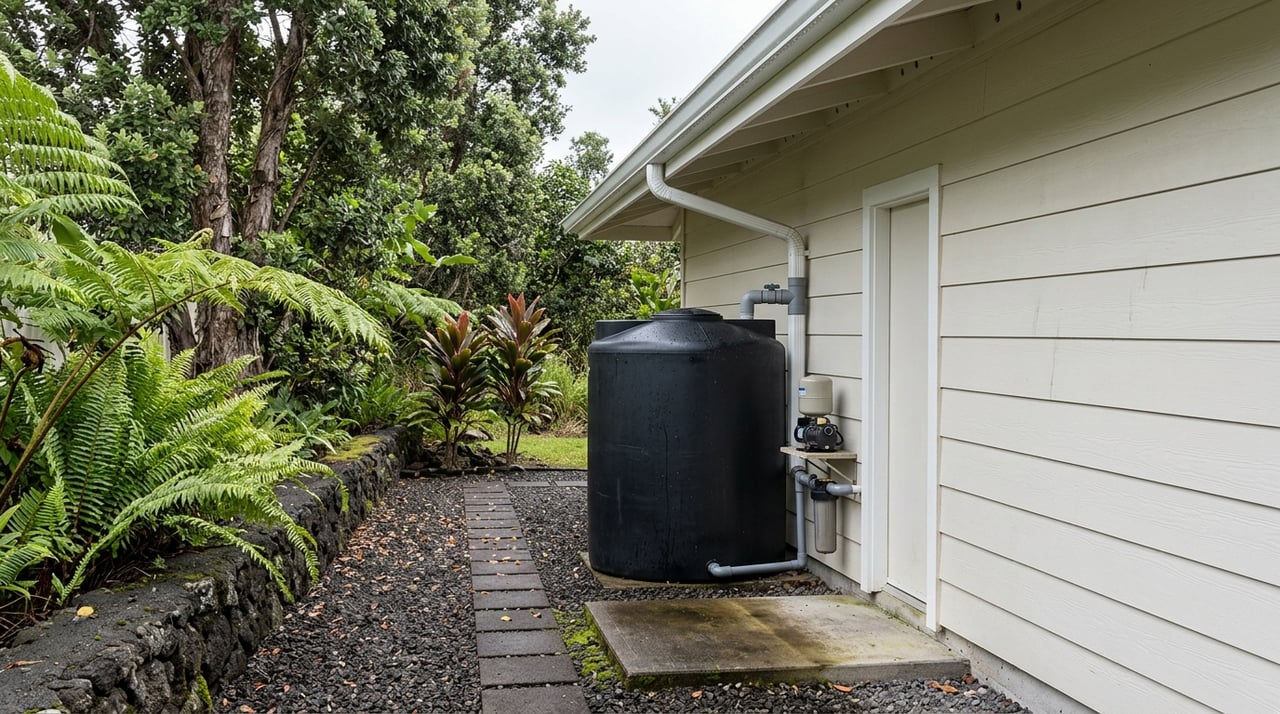
Many homes in Volcano do not follow a standard municipal water model. The Hawaiʻi County Department of Water Supply states that many residents beyond the public water system rely on rainwater catchment, and that catchment is not regulated by DWS. The State Department of Health also says individual home catchment systems are not regulated by DOH and should be well designed, maintained, and periodically tested, as explained in the county catchment guidance.
For you as a buyer, this means the water system deserves close attention. DOH recommends testing catchment water for E. coli, turbidity, lead, and copper, so it is wise to ask when the water was last tested and whether records are available. A catchment setup may work well, but only if the system has been maintained properly.
Catchment Questions To Ask
Before you remove contingencies, ask questions like:
- Does the home use rainwater catchment?
- How old is the tank?
- Is the tank properly covered?
- What is the condition of the roof, gutters, and downspouts?
- When was the water last tested?
- Are recent test results available?
These are not minor details in Volcano. They are central to how the property functions day to day.
Plan for Ash, Vog, and Roof Maintenance
Volcano buyers should also understand how eruptions can affect a property’s water system and exterior components. In 2026, Hawaiʻi County Civil Defense advised Volcano-area residents to disconnect gutters feeding catchment tanks during ashfall and tephra events, then reconnect only after roofs, gutters, and tanks are cleaned, according to the County Civil Defense update.
The National Park Service also notes that Kīlauea emissions can create vog and corrosive acid rain. That makes roof condition, gutter design, and catchment maintenance even more important. If you are buying in Volcano, your inspection should help you understand not just the home itself, but how well it is set up for the local environment.
Confirm Septic or Cesspool Early
Wastewater is another major issue to sort out before closing. The Hawaiʻi Department of Health explains that cesspools provide little treatment, while septic systems are individual wastewater treatment systems. It also states that new cesspools are prohibited in Hawaiʻi, and existing cesspools must be converted to other wastewater systems by 2050, according to the DOH wastewater program.
That matters because a cesspool is not just an older feature you can ignore for a few years. It can become a real cost item that affects your budget, loan planning, and long-term ownership expenses. If the home has a cesspool, you should discuss likely conversion needs and whether a seller credit or price adjustment makes sense.
Why Conversion Can Affect Your Timeline
The state also notes that new individual wastewater systems generally require a Hawaii-licensed civil engineer and DOH approval, as outlined in the DOH individual wastewater system guidance. In practical terms, that can add time, cost, and coordination to your purchase process.
Some qualified owners may be eligible for up to $20,000 in reimbursement through the cesspool grant program if the property is in a priority area and household income falls within the program limit. Even so, you should treat wastewater review as an early due diligence item, not something to figure out at the last minute.
Get Insurance Answers Before Removing Contingencies
Insurance is another area where Volcano buyers need clarity early. The Hawaiʻi DCCA Insurance Division says homeowners insurance pricing can depend on location, the home’s age and materials, and local fire protection class. It also says lava-zone risk is one factor that can drive premiums, and that offering new policies in the highest-risk lava zones can be difficult because homes cannot really be safeguarded from lava flows, according to the Homeowners Insurance FAQs from DCCA.
That means you do not want to wait until the end of escrow to find out whether coverage is available or affordable. A written quote before you remove contingencies can give you a much clearer picture of your true monthly housing cost.
Coverage Questions Worth Asking
The state’s lava insurance FAQ also points out that policy details vary by insurer. If lava-flow heat causes a fire, the resulting fire damage may be covered as a fire peril, but buyers should verify the exact terms of the policy. You should also ask whether the policy includes temporary or alternative housing if the home becomes uninhabitable.
More broadly, typical homeowners insurance often does not cover flood or earthquake, so it is smart to ask whether any separate coverage may be needed for site-specific risks. Insurance is not a box to check in Volcano. It is part of the purchase strategy.
Know How Financing May Be Affected
Financing can also become more detailed when a property has catchment water or non-standard wastewater systems. Current VA appraisal guidance says the appraiser must note whether a property has acceptable water and sewage systems, and VA materials say the water supply must be sufficient in size for the project, according to the VA minimum property requirement guidance.
For buyers using VA financing, this can mean extra documentation or lender conditions related to water or sewage systems. Even if you are not using a VA loan, your lender may still want more detail on catchment, septic, or cesspool systems than you would expect in other markets. The earlier you identify those issues, the smoother your transaction is likely to be.
Build a Volcano-Specific Inspection Plan
A standard home inspection is helpful, but in Volcano, you also want a checklist that reflects local conditions. The goal is to understand how the property performs in a high-rainfall, volcanic environment and whether any major system could create added cost after closing.
A strong inspection plan should include:
- Roof condition
- Gutters and downspouts
- Catchment tank age and cover
- Recent water-quality testing
- Wastewater system type
- Available permits or documentation
- Any known cesspool upgrade planning
- A written insurance quote before contingency removal
As the State DOH rainwater catchment guidance makes clear, catchment systems require ongoing attention. In Volcano, you are not just evaluating square footage and finishes. You are also evaluating how the property is set up to handle the local environment.
What This Means for You as a Buyer
Buying a home in Volcano can be a great fit if you love cooler temperatures, lush surroundings, and the unique character of this part of the Big Island. The key is to go in with clear eyes and the right process. When you understand lava zone risk, water systems, wastewater type, insurance, and financing requirements early, you can make a confident decision instead of reacting to surprises in escrow.
If you want local, practical guidance as you explore Volcano property, Tessie Fontes can help you navigate the details with a steady, organized approach and insight rooted in East Hawaiʻi real estate.
FAQs
What should I know first before buying a home in Volcano?
- The first thing to confirm is the property’s specific lava-flow hazard zone, because that can influence insurance availability, lender review, and long-term risk.
How common is rainwater catchment for Volcano homes?
- Rainwater catchment is common in areas beyond the public water system, so you should ask how the system is set up, how it has been maintained, and when the water was last tested.
What water tests should I ask for on a Volcano property?
- The State Department of Health recommends testing catchment water for E. coli, turbidity, lead, and copper.
Why does it matter if a Volcano home has a cesspool?
- Existing cesspools must be converted by 2050, and conversion can involve meaningful cost, engineering, approvals, and possible impacts on your purchase timeline.
How can insurance affect a home purchase in Volcano?
- Insurance premiums and availability can vary based on lava-zone risk, home characteristics, and policy terms, so you should get a written quote and ask about fire, lava-related loss scenarios, and temporary housing coverage before removing contingencies.
Can VA financing be more complex for a Volcano home?
- Yes. VA appraisal and lending review may require acceptable water and sewage documentation, so catchment and wastewater systems can trigger added questions or conditions.
